 Contents
- 1. The Challenge: PCBA Glue Inspection on the Production Line
- 2. Limitations of Manual PCBA Inspection
- Worker Fatigue During Continuous Inspection
- Difficulty in Standardizing Inspection Criteria Among Workers
- Lack of Images and Traceability Data
- 3. The Cobot, Machine Vision, and AI Solution
- 4. How the PCBA Inspection System Works with Techman Robots
- Step 1: Inspection After the Glue Dispensing Process
- Step 2: Image Acquisition and Classification
- Step 3: Handling Based on OK/NG Results
- Step 4: Storing Inspection Records
- 5. Training the AI Classification Model for Glue Inspection
- Steps for Training the AI Classification Model
- 6. Inspection Performance
- 7. Key Advantages of the Techman Robot Application in Electronics Manufacturing
- Improved Accuracy and Consistency
- Increased Efficiency
- Improved Traceability
- Conclusion
In electronics manufacturing, inspecting glue application quality before the PCBA enters the soldering machine is an important step. Missing glue, leakage, or glue coming into contact with memory components are defects that need to be detected after the glue dispensing process.
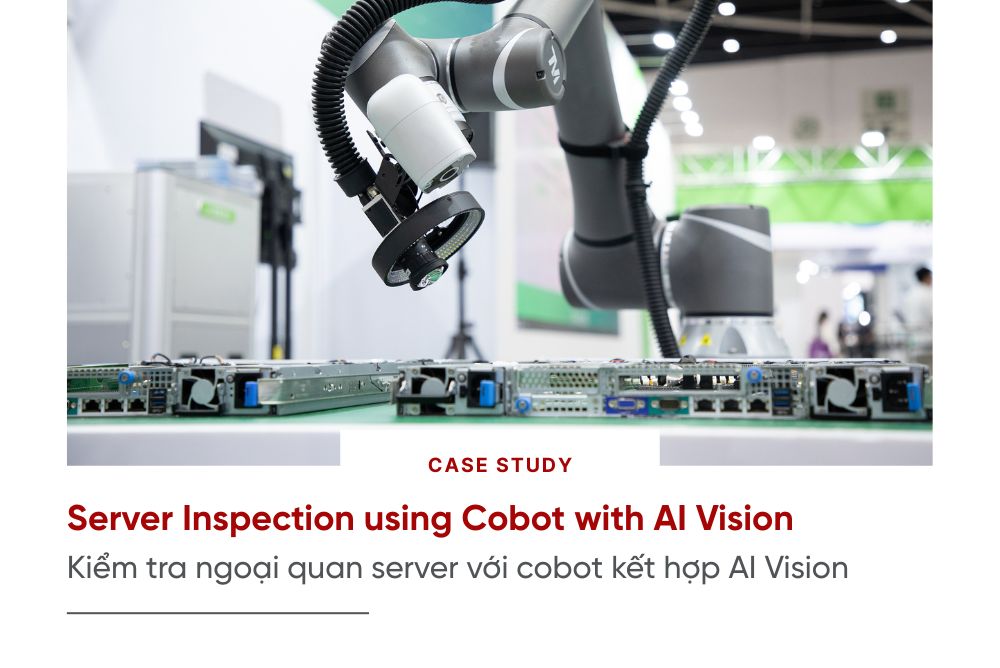
This is a case study on PCBA glue inspection using Techman collaborative robots, combined with machine vision and AI-based classification. The system classifies products as OK/NG, stores images and inspection results, and supports the handling of non-conforming products before they reach the next process.
1. The Challenge: PCBA Glue Inspection on the Production Line
PCBA (Printed Circuit Board Assembly) refers to a printed circuit board that has been assembled with electronic components. PCBA glue inspection involves checking the adhesive layer or glue lines dispensed onto an assembled circuit board (PCBA) to determine whether the glue has been applied according to the specified requirements.
Common defects that need to be detected include:
-
Missing glue or discontinuous glue lines: Areas requiring glue coverage have not been fully covered.
-
Excess glue or glue overflow: Glue spreads beyond the permitted area.
-
Incorrect positioning: The glue line deviates from its designed position.
-
Adhesive contact with prohibited areas: For example, glue comes into contact with contact pins or other components.
-
Incorrect glue line dimensions: The width, height, or amount of glue does not meet the requirements.
Inspection can be performed visually or using machine vision cameras.

In the customer's application, inspection takes place after the glue dispensing machine has completed its operation and before the PCBA enters the soldering machine. The objective is to verify whether the glue has been applied according to the requirements and prevent defective products from proceeding to the next process.
The conditions that need to be inspected include:
-
Incomplete glue dispensing: Glue has not been fully dispensed at the required positions.
-
Glue leakage: Leakage occurs after the dispensing process.
-
Incorrect adhesive contact: Glue unintentionally comes into contact with other components.
In addition, the customer's requirements go beyond defect detection. The system must also replace manual monitoring with an automated process that provides classification results and data for traceability.
This is the key difference between an isolated visual inspection and a data-managed inspection process: inspection results must be recorded for subsequent use in production monitoring or quality assessment.
2. Limitations of Manual PCBA Inspection
Worker Fatigue During Continuous Inspection
Before the implementation of the automated solution, workers had to continuously monitor glue application quality. Working for extended periods could lead to fatigue and incorrect assessments.
When inspection results depend on human observation, consistency can be affected by the condition of the inspector.
Difficulty in Standardizing Inspection Criteria Among Workers
The customer's factory also experienced high employee turnover. Different inspectors applied different evaluation criteria, making standardization difficult.
When performing the same task of verifying glue application quality, differences in individual assessments could lead to inconsistent results. Therefore, the solution needed to bring classification into a standardized process.
Lack of Images and Traceability Data
The manual inspection process did not retain images or track inspection data. This created difficulties for production management due to the lack of records available for reviewing inspection results.
Therefore, the customer required a solution capable of storing and retrieving inspection data.
3. The Cobot, Machine Vision, and AI Solution
Techman Robot implemented a collaborative robot integrated with advanced machine vision technology and AI-based classification to address this PCBA glue inspection challenge.
The main components of the solution include:
| Component | Function in the Application |
|---|---|
| Techman Collaborative Robot | Performs the automated inspection process. |
| Vision System | Captures images for the glue inspection process. |
| AI Classification | Classifies glue application conditions as OK or NG. |
| Database | Stores images and inspection results. |
| Barcode Reading and Serial Number Tracking | Supports production monitoring and traceability. |

This combination creates a complete process, from image acquisition to classification and result recording. As a result, inspection does not end with a simple pass-or-fail decision; it also generates traceable records of the results.
4. How the PCBA Inspection System Works with Techman Robots
Step 1: Inspection After the Glue Dispensing Process
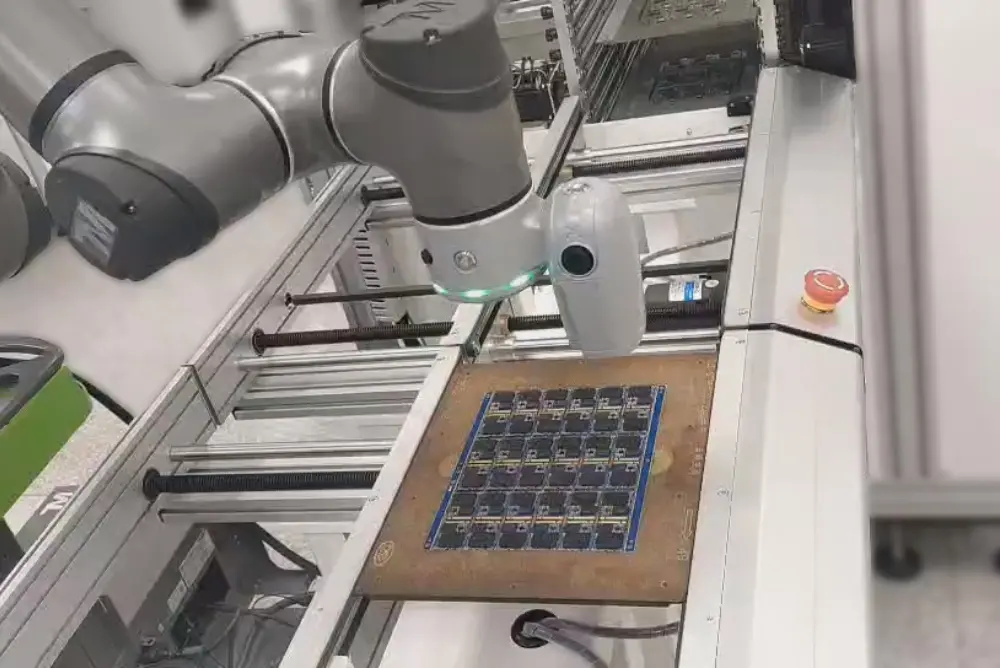
After the glue has been dispensed, the system performs an inspection before the PCBA enters the soldering machine. This position in the production sequence allows non-conforming products to be detected before moving to the next process. The inspection focuses on the glue application condition on the circuit board.

The Techman Robot uses a built-in camera directly mounted on the robot arm to perform the inspection task.
Step 2: Image Acquisition and Classification
The vision system provides images for the AI Classification function (AI-based classification). The results are divided into two groups:
-
OK: The glue has been applied according to the requirements.
-
NG: Glue is missing or incorrectly positioned.
Techman Robot's AI then performs the classification task.
Step 3: Handling Based on OK/NG Results
OK products pass the inspection and proceed to the next production process.
NG products are flagged for rework or rejection to prevent defective products from continuing through the production process.
Step 4: Storing Inspection Records
All images and results are recorded in the database for traceability and process optimization.
Storing both images and inspection conclusions ensures that inspection records contain both visual data and evaluation results. This provides a basis for reviewing product conditions rather than simply knowing that a product has been inspected.
5. Training the AI Classification Model for Glue Inspection
The dataset used for training in this application includes both images of conforming and non-conforming samples.
| Item | Application Information |
|---|---|
| AI Function | AI Classification |
| Number of OK Images | 130 images |
| Number of NG Images | 80 images |
| Total Number of Images | 210 images |
| Training Time | Approximately 10 minutes |
The image dataset includes both conforming and non-conforming samples, corresponding to the system's two output categories. Thanks to the simple and fast training process, customers can train the AI themselves according to their requirements or retrain it when product specifications change.

Steps for Training the AI Classification Model
6. Inspection Performance
The PCBA inspection solution using Techman Robot delivers outstanding results compared with visual inspection:
| Performance Indicator | Result |
|---|---|
| Processing Speed | 108 vision tasks in 30 seconds |
| Inspection Accuracy | 99.9% |
| False Alarm Rate | Below 0.1% |
| Overkill Rate (Incorrect Rejection of Conforming Products) | Below 0.1% |

Techman Robot uses the AI Classification module for this application.
7. Key Advantages of the Techman Robot Application in Electronics Manufacturing
Improved Accuracy and Consistency
-
Eliminates human errors during the inspection process through automation.
-
Achieves 99.9% accuracy with AI classification technology, helping control defects and ensure product quality.
Increased Efficiency
-
The fully automated inspection process reduces dependence on manual labor.
-
Significantly shortens processing time and increases production speed.
Improved Traceability
-
The AI-based inspection system stores all results and images to support quality management.
-
Barcode reading and serial number tracking functions support effective production monitoring.

Techman Robots offer a variety of options in terms of reach and payload.
Conclusion
The PCBA glue inspection solution using Techman cobots and AI Classification simultaneously addresses three requirements: detecting non-conforming glue application, automating the classification process, and storing the customer's traceability data.
This application demonstrates how manufacturers can leverage AI to optimize production lines and maintain a high level of quality control.
Contact Temas for specific consultation on how to optimize your production line with Techman robots.


 Read more