 Contents
In today’s manufacturing environment, companies face increasing pressure to mark products with exceptional precision while preserving the integrity of the material itself. Even a small amount of heat can deform delicate components or cause products to fall short of stringent production standards.
As a result, engineers are constantly seeking marking technologies capable of producing permanent, high-quality marks without introducing thermal stress to the material.
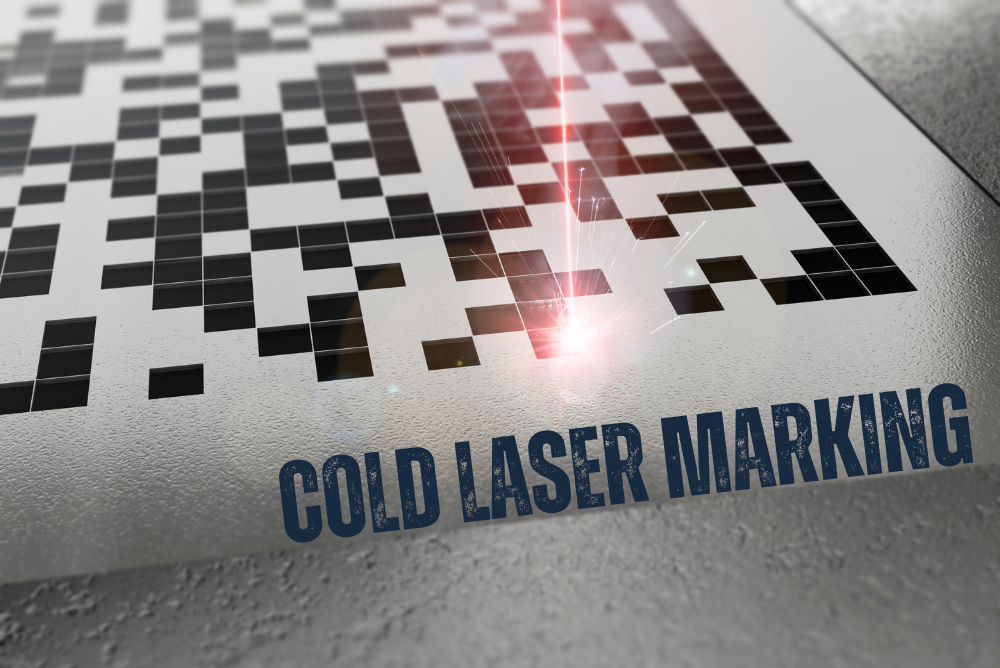
UV laser marking, also known as cold laser marking, is a solution that creates crisp, durable characters, serial numbers, barcodes, and identification codes while preserving the structure and appearance of sensitive products. The technology effectively meets demanding requirements for traceability, quality control, and product identification.
In this article, Temas explores what UV laser marking is, its key advantages, and the industrial applications where it delivers the greatest value.
How UV Laser Marking Works
UV laser marking relies on a precisely controlled interaction between laser energy and the material being marked. By utilizing short-wavelength ultraviolet light and high-energy laser pulses, the process creates permanent marks with virtually no thermal impact on the material.

The effectiveness of UV laser marking is based on several key factors:
Short Wavelength
UV lasers operate at a shorter wavelength, which means they carry higher photon energy and can be focused into an extremely small spot size. This allows for exceptionally fine, sharp, and accurate marking results.
Photochemical Reaction
Unlike conventional laser marking methods that rely primarily on heat, UV laser marking triggers photochemical reactions at the molecular level. The photon energy breaks chemical bonds on the material surface, causing subtle changes in color or microstructure that create a permanent mark.
Minimal Heat-Affected Zone
The laser energy is concentrated almost entirely within the marking area, significantly reducing the risk of warping, micro-cracking, or internal thermal stress.
Materials Compatible with UV Laser Marking
This makes UV laser marking particularly suitable for thin, delicate, and heat-sensitive materials, including:
Metals
UV laser marking is highly effective on metal surfaces that require dimensional stability, surface consistency, and precise marking quality. It produces high-contrast, sharply defined marks on stainless steel, titanium, and a wide range of metal alloys.

Plastics
The technology can mark various plastic materials without damaging their structure or appearance. It is an ideal solution for industries that require marking on smooth, glossy, or finely textured surfaces.

Paper and Cardboard
UV laser systems can create highly visible text, logos, and product codes on packaging materials. Their precision makes barcode and traceability marking on paper-based materials more reliable and consistent.

Glass
UV laser marking produces detailed, long-lasting marks on both transparent and frosted glass surfaces. The short wavelength enables intricate marking with excellent contrast and clarity.

Technical Ceramics
The marking process creates subtle microstructural changes on ceramic surfaces, generating high-resolution marks with stable contrast and excellent readability.

Foils and Films
Metal foils, polymer films, and multilayer laminated materials are often highly sensitive to heat. UV laser marking can process these materials without affecting the surrounding layers or compromising material performance.

Advantages of UV Laser Marking Technology
The combination of high precision and long-term durability makes UV laser marking an ideal solution for demanding applications involving quality assurance, traceability, and product lifecycle management.
1. Preserves Material Properties
UV laser marking helps maintain the original physical and chemical characteristics of the material.
Because the process generates minimal heat, metals retain their strength and plastics remain free from deformation or surface damage. On painted or anodized surfaces, marks can be created without discoloration or coating delamination.
2. Exceptional Precision
UV laser technology meets the strictest requirements of modern manufacturing. The system can produce serial numbers, Data Matrix codes, traceability markings, and complex identification information with outstanding clarity and consistency.
Each mark is highly repeatable, easy to read, and maintains excellent contrast throughout the product’s service life.
3. Compatible with a Wide Range of Materials
Its ability to process diverse materials and product geometries makes UV laser marking a highly versatile solution across many industries.
The technology can mark both flat surfaces and complex 3D components. When switching between materials, setup and adjustment requirements are significantly reduced, helping manufacturers maintain stable production processes across multiple product lines.
Applications of UV Laser Marking
Thanks to its ability to create high-quality permanent marks while protecting material integrity, UV laser marking has become widely adopted across numerous manufacturing sectors.
Manufacturing and Industrial Production
In machining and manufacturing environments, UV laser marking supports component identification, traceability, and quality control.
The technology can mark machine parts and assemblies, enabling companies to manage serial numbers, batch information, and branding throughout the product lifecycle.
Medical Devices
Within the medical device industry, UV laser marking produces clear, permanent marks capable of withstanding sterilization processes and repeated use.
The technology is commonly used for surgical instruments and medical equipment, helping manufacturers comply with stringent traceability and regulatory requirements.

Aerospace and Defense
Aerospace and defense components require marking that remains readable under extreme operating conditions.
UV laser marking creates durable identification marks on high-value alloys and composite materials without affecting protective coatings or material properties. Serial numbers and identification codes remain legible even under vibration, stress, and demanding environmental conditions.

Electronics and Semiconductor Manufacturing
The electronics industry requires marking technologies that do not damage heat-sensitive materials.
UV laser marking enables precise marking on PCB boards, protective films, and miniature electronic components. High-resolution Data Matrix codes support product traceability and anti-counterfeiting initiatives.

Building Materials
In the construction sector, UV laser marking is used to apply product codes, identification information, and logos to coated metal components and structural materials.
The resulting marks offer excellent durability, ensuring reliable traceability throughout the product’s service life.

Automotive Industry
In automotive manufacturing, UV laser marking is commonly used to create permanent identification marks on:
- Electronic assemblies
- Thin metal parts and heat-sensitive components

These marks are designed to withstand harsh operating environments, including continuous temperature fluctuations and exposure to chemicals, ensuring long-term traceability and compliance with automotive quality standards.
Selecting the right laser system, configuration, and operating parameters is essential for maximizing the benefits of UV laser marking technology and meeting increasingly demanding industry requirements. Temas is an authorized distributor of Gravotech laser marking systems in Vietnam. Contact our team for expert guidance and customized solutions tailored to your specific marking applications.



 Read more