 Contents
- Machine Vision Inspection for Automotive Components
- Automotive Component Inspection Examples
- Display Panel Light Inspection
- Printing Inspection on Turn Signal Lever
- Visual Inspection of Control Panel Switches
- Visual Inspection of Automotive Lamp Reflectors
- Visual Inspection of Automotive Mirrors
- Visual Inspection of Plastic Hooks
- Visual Inspection of Metal Seatbelt Components
Visual inspection using image processing is a method in which cameras capture images of an object and immediately perform inspections based on the acquired images.
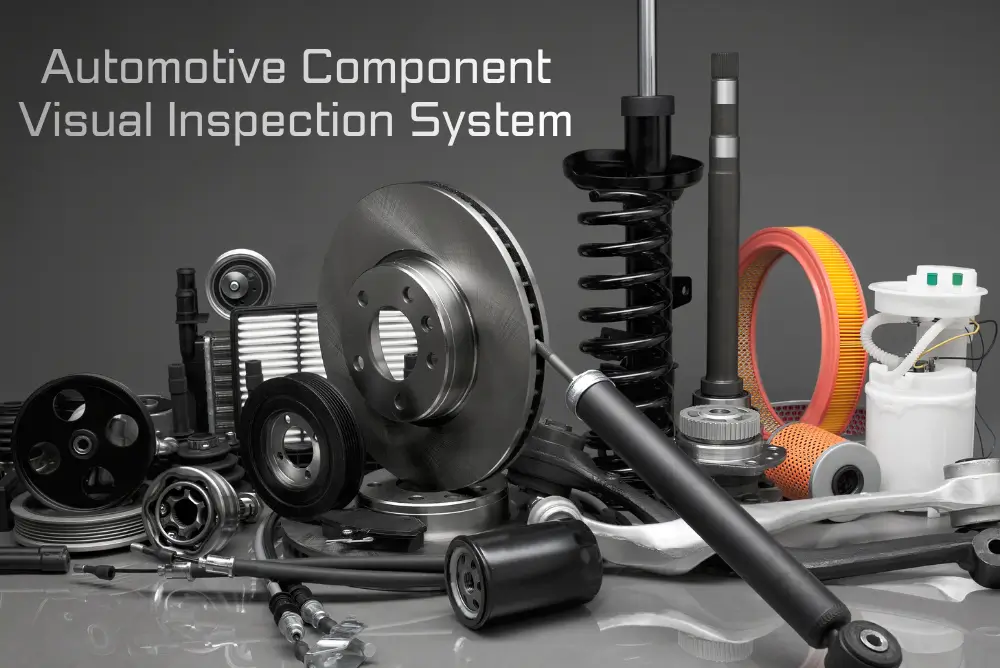
Machine Vision Inspection for Automotive Components
A single automobile consists of more than 30,000 different components. Among them, many parts still rely on human visual inspection. By combining advanced optical solutions with a wide range of algorithms, ViSCO Technologies has developed a comprehensive machine vision inspection system.
This article introduces several representative inspection examples. Temas hopes these cases will help you address automation challenges in your production inspection processes.

Automotive Component Inspection Examples
Display Panel Light Inspection
Because large products (approximately 150 mm × 100 mm) are difficult to inspect in a single shot, the inspection system must meet both processing speed and accuracy requirements.
>> The solution is segmented image capture with seamless image stitching
VTV-9000 machine vision inspection system is capable of high-speed image acquisition and processing. The system instantly receives multiple segmented images captured by a high-resolution camera and seamlessly stitches them together to create a highly detailed image. As a result, the inspection process is fully automated while meeting the required processing time and accuracy.

Printing Inspection on Turn Signal Lever
When printing on the curved surface of a lever, variations can occur in character width and size. Missing characters or pinholes in the printed lines may also appear.
>> A “dynamic mask” automatically defines the appropriate inspection area.
A dynamic mask is a non-fixed inspection region that automatically follows the actual shape of the printed pattern on each product. It tracks predefined brightness contours—such as the curved shape of the lever in this example—allowing the inspection area to adapt to each specific size.
When combined with defect detection tools, the system tolerates minor variations such as slightly thicker or thinner printing, while accurately detecting true defects like chipping and pinholes. This contrasts with conventional inspection systems, which may incorrectly judge normal variations on curved surfaces as defects, resulting in good products being rejected.

Visual Inspection of Control Panel Switches
The challenge here is detecting surface defects such as small dents or bumps that are extremely difficult to identify using standard automated inspection methods.
>> Defects are highlighted by combining specialized lighting with proprietary inspection technology.
The system uses multiple light sources from different angles and captures images at different timings. The proprietary inspection tool “TSCDefFinder” analyzes temporal changes between the captured images and applies a unique algorithm to generate images that emphasize defects. This enables the detection of micro-level defects that would be missed when using illumination from a single direction.

Visual Inspection of Automotive Lamp Reflectors
Lamp reflectors directly affect vehicle performance, so inspection standards are extremely strict. Their curved mirror-like surfaces make scratch detection particularly challenging.
>> Lighting control is used to achieve uniform illumination across curved surfaces.
By using a dedicated lighting controller for the VTV-9000 series (Machine vision inspection system ViSCO), the system can synchronize light on/off control and brightness adjustment with image capture timing. Light is projected from multiple positions to ensure even distribution across the curved surface. Analyzing the captured images makes it possible to detect defects reliably, including fine scratches that are often overlooked by conventional optical systems.

Visual Inspection of Automotive Mirrors
Mirror surfaces are notoriously difficult to inspect and are prone to missed defects when checked by the human eye, making automation essential.
>> Inspection through a combination of optical solutions and image filtering.
The system captures images under optimized optical conditions that minimize the impact of mirror reflections. Image filters then remove noise and extract defects, optimizing the images for inspection. As a result, dents and scratches on mirror surfaces are detected accurately, preventing missed defects.

Visual Inspection of Plastic Hooks
This application requires inspection of the entire circumference of the product, where defects on curved surfaces and edges are easily overlooked.
>> Full circumferential inspection using a camera with ultra-deep depth of field while rotating the product.
A depth camera with an ultra-deep depth of field captures images from an angled view. The product is rotated by 45° and continuously imaged to inspect the entire circumference. Compared to multi-camera setups, this solution reduces cost and saves installation space.

Visual Inspection of Metal Seatbelt Components
Highly reflective metal surfaces make it difficult to detect small dents and scratches.
>> Using PMS inspection to analyze multiple images and detect surface variations.
The system illuminates the product from multiple directions and analyzes the captured images by removing the influence of stains and surface patterns, leaving only defect information. For metals with hairline finishes, this method effectively eliminates the background and isolates defects, enabling detection of micro-level flaws that were previously missed and ultimately improving product quality.

Temas is the authorized distributor of ViSCO Technologies’ camera-based and AI Vision visual inspection solutions in Vietnam. We support customers throughout solution consultation, operational training, and system tuning to ensure stable performance when deployed on actual production lines.
If you are facing complex visual inspection challenges—such as printing on curved surfaces, highly reflective components, or strict requirements to minimize false detections—Temas is ready to evaluate your samples and propose the most suitable solution. Contact Temas today.



 Read more