 Contents
What Is ASRS?
ASRS (Automated Storage and Retrieval System) is an automated solution for storing and retrieving goods using robots or computer-controlled equipment. Common examples include unit-load AS/RS for pallets, mini-load AS/RS, shuttle-based systems, and vertical storage solutions such as VLMs and carousels,...
Beyond saving space and accelerating material handling, ASRS can be seamlessly integrated with Warehouse Management Systems (WMS), Warehouse Execution Systems (WES), and other software platforms. This integration enables businesses to monitor inventory in real time and coordinate warehouse operations more efficiently.

Applications of ASRS
ASRS is widely adopted across manufacturing and distribution environments. Industries that benefit most from ASRS include:
- Manufacturing – Efficient management of components and raw materials.
- Automotive – Fast storage and retrieval of parts and assemblies.
- Retail – Improved inventory control and faster order fulfillment.
- Pharmaceuticals – Secure, accurate storage of medical supplies in compliance with strict safety regulations.
Let’s take a closer look at some common ASRS applications:
1. Point-of-Use Inventory
Point-of-Use (PoU) inventory refers to storing materials directly at the location where they are needed. When integrated with a Warehouse Execution System (WES), this approach helps determine optimal picking, packing, and shipping strategies for each order.
For example, WES can factor in inventory levels, order priority, product expiration dates, and delivery requirements to optimize warehouse workflows.
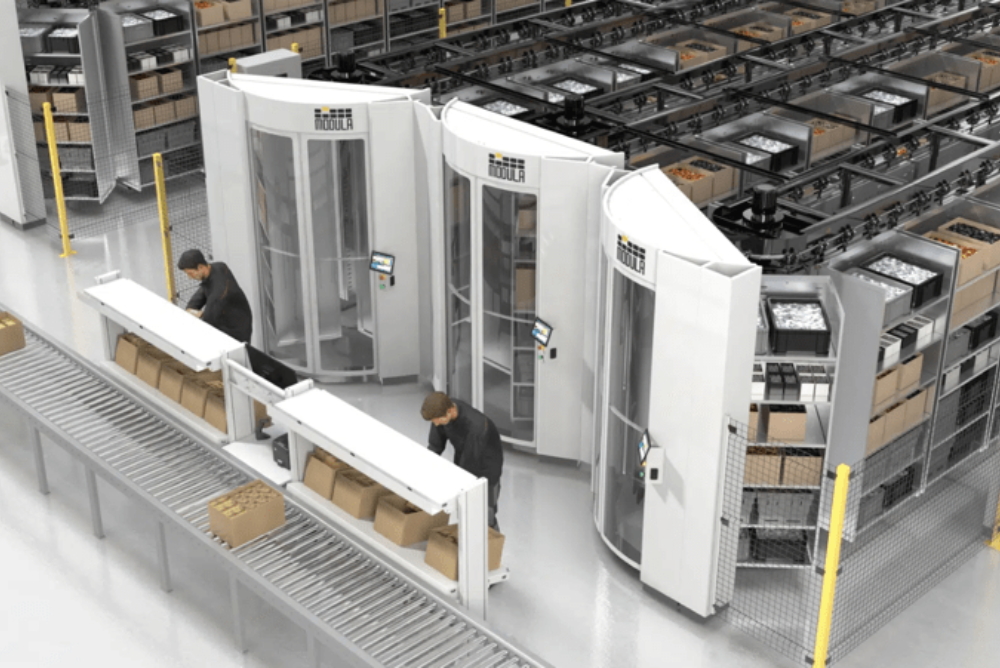
2. Goods-to-Person Picking and Packing
Goods-to-Person is a warehouse automation method where items are automatically brought to the operator instead of workers walking through the warehouse to find them. Autonomous Mobile Robots (AMRs), conveyors, or stacker cranes retrieve the required items and deliver them to picking stations.
This approach significantly reduces picking time and minimizes errors. It is widely used in modern warehouses to streamline order fulfillment. ASRS can also automatically organize inventory based on size and weight for higher efficiency.

3. Inventory Storage Management
ASRS enables precise control of reserve inventory, ensuring that sufficient stock is always available. At the same time, it enhances warehouse security by reducing loss, damage, and unauthorized access, keeping stored goods safe and well managed.

9 Types of ASRS
There are nine primary ASRS configurations commonly used in warehouses today:
1. Unit-Load ASRS
Unit-load ASRS is designed to store and retrieve large load units, typically pallets or large containers. These systems use automated stacker cranes and racking structures to maximize storage density and handling efficiency.
They can handle loads ranging from 500 to 2,500 kg, with storage heights exceeding 30 meters. The system consists of pallet racks with narrow aisles, where stacker cranes travel horizontally and vertically to move pallets.
Unit-load ASRS is ideal for high-density storage of bulky goods, offering safe storage and fast retrieval with minimal labor.

Two common configurations include:
a. Fixed-aisle crane unit-load ASRS:
- The crane is permanently installed in a single narrow aisle.
- It moves vertically and horizontally within that aisle.
- Best suited for warehouses with limited space and centralized storage zones.
b. Movable-aisle crane unit-load ASRS:
- Cranes can travel along rails between multiple aisles.
- Offers greater flexibility and wider coverage.
- Typically used in larger warehouse facilities.
2. Mini-Load ASRS
Mini-load ASRS, also known as tote or carton handling systems, is ideal for lightweight items, usually under 35 kg. Unlike unit-load systems, mini-load ASRS focuses on cartons, trays, and small containers.
These systems are especially suitable for warehouses with limited floor space but a high number of SKUs. They are commonly used in manufacturing, distribution, and retail operations where speed and accuracy for small orders are critical.

3. Shuttle-Based ASRS
Shuttle-based ASRS uses robotic shuttles to move goods to and from storage locations. These battery- or capacitor-powered shuttles can operate on single or multiple levels, traveling along rails between storage racks and delivering items to designated workstations.
Each shuttle typically handles 200–700 order lines per hour and can manage totes or cartons weighing from 13 kg up to more than 45 kg.

4. Robotic Cube-Based Storage
Robotic cube-based storage systems use dense cubic grids where inventory is stored in stacked bins. Intelligent robots operate on top of the grid, retrieving bins and delivering them to workstations as needed.
This system offers extremely high storage density and fast access, making it ideal for environments with limited space and high order volumes.

5. Floor Robots (AGV and AMR)
Floor robots include Automated Guided Vehicles (AGVs) and Autonomous Mobile Robots (AMRs). These robots transport goods across the warehouse and are often used with tow carts to reduce employee travel time.
AGVs follow predefined paths guided by magnetic tape, wires, or sensors. AMRs are more advanced, equipped with multiple sensors, machine learning, and sometimes AI, allowing them to navigate dynamically without fixed routes.
AMRs are commonly used to transport totes, cartons, and small items within the warehouse.
6. Horizontal Carousel ASRS
Horizontal carousel ASRS uses rotating horizontal conveyors to bring stored items to the picking position. The system consists of a track with rotating bins that store inventory and deliver items automatically when requested.
LED indicators guide operators to the correct bin and location. Horizontal carousels are ideal for high-speed picking in facilities with low ceiling heights.
7. Vertical Carousel ASRS
Vertical carousel systems use vertically rotating carriers to deliver stored items to an ergonomic access point. They are well suited for storing small components, electronics parts, or documents.
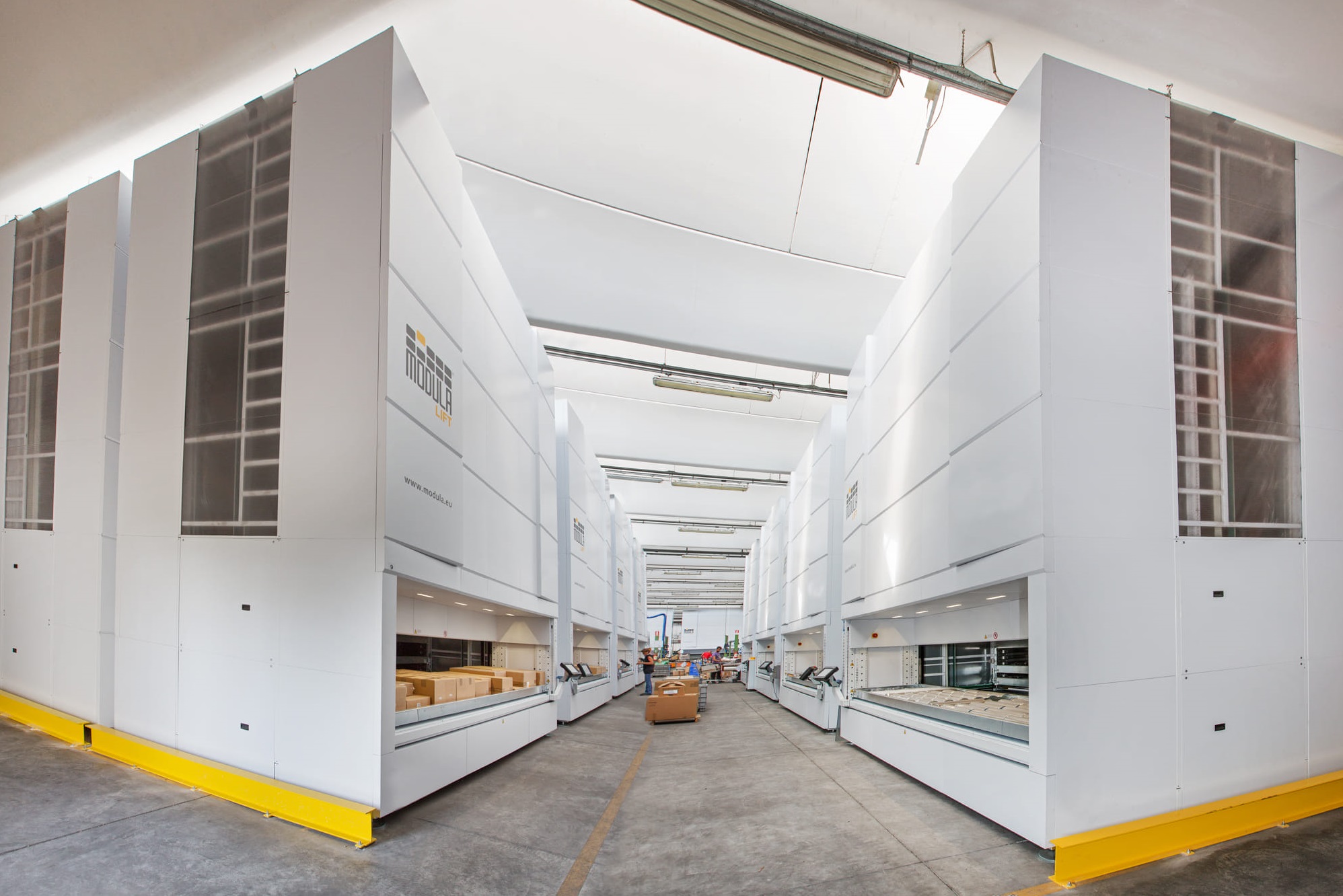
8. Vertical Lift Module (VLM) ASRS
Vertical Lift Modules focus on maximizing vertical warehouse space. The system consists of an automated extractor and vertically arranged trays enclosed within a compact structure.
When an item is requested, the extractor retrieves the tray and delivers it to the operator, creating an efficient goods-to-person workflow. This significantly reduces picking time and operator movement.
VLM systems can store a wide variety of items regardless of shape, size, or weight, making them ideal for warehouses with limited floor space.
9. Micro-Load Storage Systems
Micro-load ASRS is suitable for high-density storage environments where inventory needs to be stored, sorted, and accessed directly at the point of use.
These systems use multiple robots moving across a dense grid to retrieve bins and deliver them to conveyors or workstations. Many micro-load solutions are integrated with other ASRS technologies to form a comprehensive intralogistics solution.

Benefits of ASRS

From inventory control to workplace safety, ASRS delivers a wide range of advantages:
- Maximized warehouse space utilization
- Improved operational efficiency
- Enhanced workplace safety
- Higher productivity
- Greater accuracy
- Better inventory visibility and control
- Faster order fulfillment from receipt to delivery
- Reduced labor costs
- Lower overall warehousing expenses
Signs Your Warehouse Needs ASRS

- Frequent warehouse congestion
- Time-consuming manual receiving processes
- Excessive employee travel time
- Difficulty locating inventory
- Lost or misplaced goods
- Damaged products
- High risk of workplace accidents
How to Choose the Right ASRS for Your Warehouse
When selecting an ASRS solution, consider the following factors:
1. Warehouse Size and Layout
Evaluate available floor space, ceiling height, aisle width, and floor load capacity. Ensure the selected system fits your layout without disrupting material flow.
Example: If your warehouse has high ceilings but limited floor space, a Vertical Lift Module (VLM) may be the ideal choice.
2. Inventory Characteristics
Analyze the size, weight, handling requirements, and any special storage conditions of your inventory. Each ASRS type is designed for specific product profiles.
Example: Temperature-sensitive goods may require systems with climate control capabilities.
3. System Integration
Choose an ASRS that integrates easily with your existing WMS and other warehouse technologies, ensuring real-time data synchronization for inventory and order status.
4. Maintenance Requirements
Consider long-term maintenance costs and service needs. Some systems require more frequent software updates or hardware inspections than others.

Cost Factors Affecting ASRS Investment
- Type of ASRS modules
- Warehouse size and storage capacity
- Inventory characteristics
- Customization and infrastructure upgrades
- Special handling requirements (temperature, humidity control)
- Transportation and installation costs
- Integration with WMS, DMS, or ERP systems
Modula Automated Storage and Retrieval Systems
Temas is the official distributor of Modula smart storage systems in Vietnam. We help businesses redesign and upgrade their warehouses for long-term operational efficiency and sustainable growth.
1. Modula Vertical Lift Modules (VLMs)
For warehouses with high ceilings looking to fully utilize vertical space, Modula VLMs are an optimal solution. With advanced technology and intuitive Copilot controls, operators can retrieve items quickly and accurately.

Notable VLM product lines include:
- Modula Lift: Ideal for heavy loads, optimized picking time, and suitable for all industries.
- Modula Slim: Compact design with only 3 m² of floor space, yet double the storage capacity of traditional shelving.
- Etc.
2. Modula Horizontal Carousels
For facilities with low ceilings or vertical space limitations, Modula Horizontal Carousels provide a reliable alternative. These systems deliver up to 99% picking accuracy and throughput of up to 550 order lines per hour per operator.

Whether your warehouse requires vertical or horizontal automation, Temas offers solutions tailored to your operational needs and business goals. With modern, safe, and efficient technology, Modula ASRS helps optimize space, increase productivity, and elevate warehouse management to the next level.



 Read more