 Contents
- Development Trends in Machine Tools
- Performance Requirements for Rotary Components
- Structure and Characteristics of Cross Roller Rings
- Structure and Characteristics of Double-Row Angular Contact Bearing Model RW
- Structure and Characteristics of the High-Speed Double-Row Angular Contact Bearing Model BWH
Machine tools play an indispensable role in the production of industrial products. As industrial manufacturing continues to advance and technology evolves, performance requirements for machine tools have become increasingly demanding.
Development Trends in Machine Tools
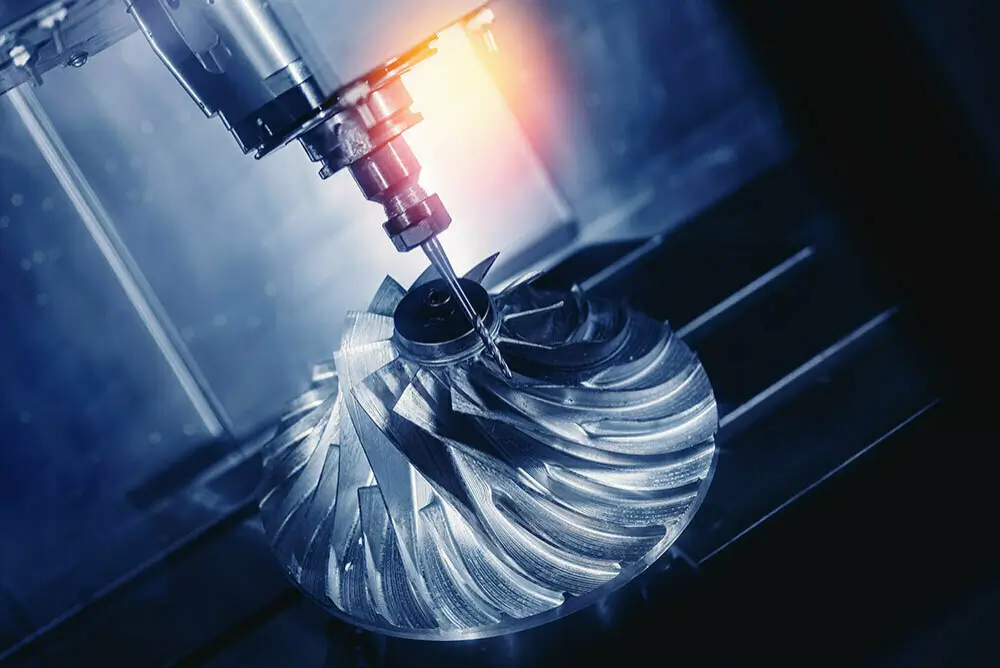
In recent years, the machine tool industry has made significant progress, particularly with the emergence of multi-tasking machining centers featuring an increasing number of axes. In the past, most machine tools were limited to three linear axes (X, Y, and Z). Today, the market offers 5-axis machines that incorporate two additional axes: a rotary axis for the workpiece and a tilting axis. There are also multi-tasking machines that integrate turning functions into the same platform.
Processes that once required multiple machines can now be consolidated into a single multi-axis, multi-function machining center. This integration not only improves machining accuracy and productivity, but also helps reduce factory floor space requirements and overall management costs.

Performance Requirements for Rotary Components
Rigidity and precision are the most critical performance requirements for rotary components in machine tools, as they directly affect machining accuracy. In multi-axis machines such as 5-axis machining centers, the increase in the number of axes means that positional errors and deflections of rotary components can accumulate. As a result, each individual rotary component must meet far stricter standards for rigidity and precision.
For this reason, every rotary unit must deliver exceptionally high stiffness and accuracy. Moreover, in machines that integrate turning operations, the rotary axis must operate at high speeds while carrying the workpiece. This places additional demands on rotary components to maintain stable performance even under high-speed conditions.
In this article, Temas introduces THK’s rotary bearing solutions, including Cross Roller Ring and two series of Double-Row Angular Contact Ring: the Model RW and the High-Speed Model BWH. These products are specifically designed to meet the increasingly stringent requirements of modern machine tools.
Structure and Characteristics of Cross Roller Rings
Cross roller rings are rotary bearings with exceptionally high rigidity, capable of supporting radial loads (perpendicular to the rotation axis), axial loads, and moment loads from all directions using a single bearing. The rollers are arranged orthogonally to each other and operate with a 45-degree contact structure, enabling smooth rotational motion while maintaining high stiffness.
Spacers (retainer cages) are placed between the rollers to reduce friction and ensure stable motion over extended periods of operation.
With conventional angular contact bearings or tapered roller bearings, multiple bearings are typically required to withstand moment loads. A key advantage of cross roller rings is that a single bearing can provide equivalent load-carrying capacity. As a result, this bearing type is significantly thinner and lighter in structure.

Thanks to these advantages, cross roller rings are widely used in applications that require high rigidity within limited installation space, such as robot joints and rotary axes, as well as rotary and tilting axes in machine tools.
Structure and Characteristics of Double-Row Angular Contact Bearing Model RW
The Double-Row Angular Contact Bearing Model RW was developed to achieve a compact rotary bearing size comparable to that of cross roller rings, while simultaneously delivering high rigidity and high precision.

Comparison of Bearing Rigidity: Cross Roller Rings vs. Double-Row Angular Contact Bearings
Unlike cross roller rings, which feature a single raceway, Model RW is designed with two raceways in a DB (double back-to-back) configuration. This structure incorporates two raceway grooves with a 45-degree contact angle, allowing the bearing to support radial loads, axial loads, and moment loads from all directions.
In addition, Model RW uses smaller-diameter rollers arranged in greater numbers, increasing the total contact area between the rollers and raceways. This design significantly reduces displacement under load while lowering contact stress on both the raceways and rollers.
Another important distinction compared to cross roller rings lies in the bearing structure. In cross roller rings, either the inner ring or the outer ring is typically split in the axial direction. In contrast, the Double-Row Angular Contact Bearing Model RW features both the inner and outer rings as one-piece, integrated structures. This monolithic design greatly enhances overall rigidity and minimizes deformation even under heavy loads. As a result, Model RW achieves approximately twice the rigidity of a cross roller ring of the same size.

In addition to rotational accuracy, the Double-Row Angular Contact Bearing Model RW is also specified with an important performance metric known as wobbling accuracy. This parameter represents runout at a position close to the actual machining point of the workpiece and is defined based on the assumed machining position above the rotary axis and the measurement location.
In addition to rotational accuracy, the Double-Row Angular Contact Bearing Model RW is also specified with an important performance metric known as wobbling accuracy. This parameter represents runout at a position close to the actual machining point of the workpiece and is defined based on the assumed machining position above the rotary axis and the measurement location. The wobble measurement position (A) is defined at a height equal to the pitch circle diameter of the rollers (B). Conceptually, when the inner ring rotates in a tilted condition—similar to the wobbling motion of a spinning top—positions closer to the bearing are less affected, while deviations become more pronounced at higher locations.

Because Model RW incorporates a larger number of rollers, the influence of individual roller variation is significantly reduced. This results in improved rotational accuracy and a wobbling accuracy of less than 2 μm, clearly demonstrating the exceptionally high precision of this rotary bearing design.
Structure and Characteristics of the High-Speed Double-Row Angular Contact Bearing Model BWH
High-Speed Operating Capability
The High-Speed Double-Row Angular Contact Bearing Model BWH uses steel balls as rolling elements. Compared with cylindrical rollers used in cross roller rings, balls have a much smaller contact area with the raceways. This significantly reduces the circumferential speed difference between the rolling elements and the raceways, thereby minimizing spin slip and friction. As a result, heat generation is effectively controlled during high-speed rotation.

A one-piece ball cage is employed to further suppress heat buildup caused by friction between the balls. In addition, the use of lubricants specifically formulated for high-speed applications contributes to smoother rotation and reduced thermal generation.
Model BWH can also be operated with oil–air lubrication or oil mist lubrication systems, both of which are highly effective in controlling temperature under high rotational speeds. With an appropriate lubrication method selected, the bearing can operate continuously at a Dpw·N value of up to 800,000.

Rigidity
The rigidity of the High-Speed Double-Row Angular Contact Bearing Model BWH is based on a design concept similar to that of Model RW. It features two raceways in a DB (double back-to-back) configuration with a 45-degree contact angle, and both the inner and outer rings are of a one-piece construction. This integrated structure enhances overall stiffness and allows for the application of high preload levels.
In rotary bearings, preload is typically generated by assembling balls that are slightly larger than the nominal size. If the raceway rings lack sufficient rigidity, the elastic force of the balls (internal load) can deform the rings, preventing the desired preload from being achieved. Thanks to its high-rigidity structure and effective preload capability, Model BWH can achieve stiffness comparable to that of cross roller rings. In this article, we have introduced the technological innovations behind THK’s rotary bearing products, developed in response to the evolution of multi-axis and multi-tasking machine tools and the increasingly stringent performance requirements placed on rotary bearings.

In particular, the High-Speed Double-Row Angular Contact Bearing Model BWH delivers distinct value to the market by enabling high-speed operation—an area where conventional cross roller rings have inherent limitations. Beyond machine tools, this product also holds strong potential to enhance speed, rigidity, and precision in a wide range of industrial equipment. We hope this article helps you evaluate and select cross roller rings as well as THK’s complete range of rotary bearing solutions. Temas is the authorized distributor of THK products in Vietnam. Please contact Temas for detailed product consultation and technical support.



 Read more