 Contents
Aluminum is widely used in industrial projects thanks to its light weight, high strength, and excellent corrosion resistance. Aluminum alloys have been developed and utilized for decades, and today they are indispensable across many industries such as automotive manufacturing, aerospace, construction, electronics, and more.
This versatile material can be processed in many different ways casting, extrusion, forging, and foil production offering tremendous design flexibility.
Beyond being lightweight and durable, aluminum also features a smooth surface and high contrast potential, making it an ideal material for industrial marking and engraving. Engraving characters on aluminum supports traceability requirements, factory regulations, and brand identification, all while preserving the integrity of the engraved component.
Gravotech aluminum engraving solutions
- Laser engraving
- Dot peen & scribing
- Rotary & CNC
- Laser tables
Laser engraving on aluminum
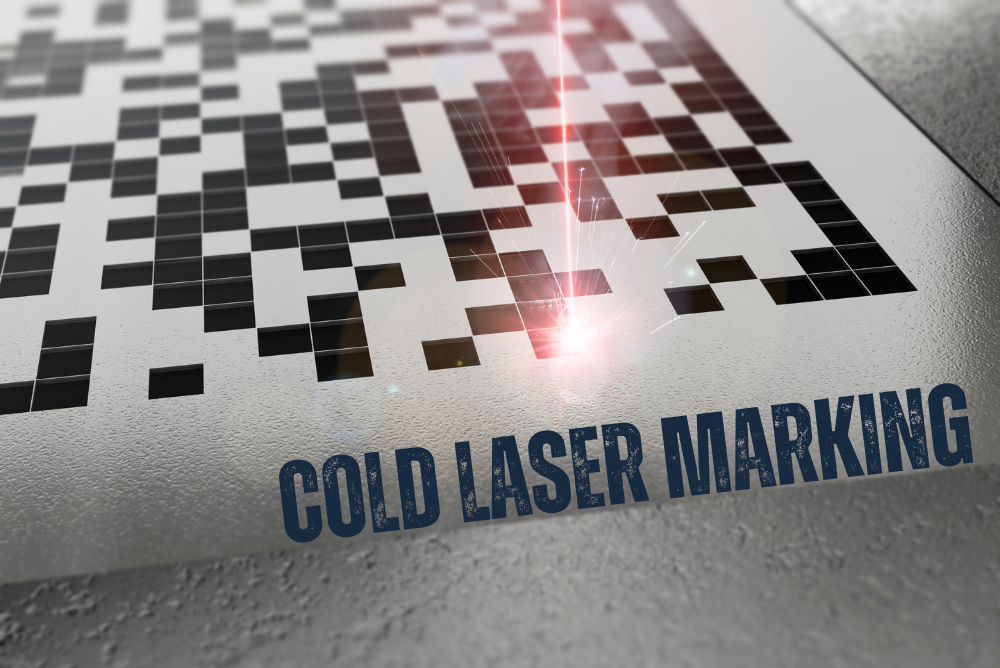
Laser technology is one of the most versatile and efficient methods for marking aluminum. As a non-contact process, it eliminates tool wear and minimizes the risk of part deformation. Depending on the alloy and surface treatment, laser marking can produce either black or white contrast marks.
On anodized aluminum, the laser creates high-resolution white markings, while on bare aluminum, the reaction results in dark, sharp engravings. Laser marking preserves the structural integrity of the material while offering excellent resistance to wear and environmental exposure. This method is ideal for small text, serial numbers, barcodes, and highly detailed logos.

Dot peen engraving on aluminum
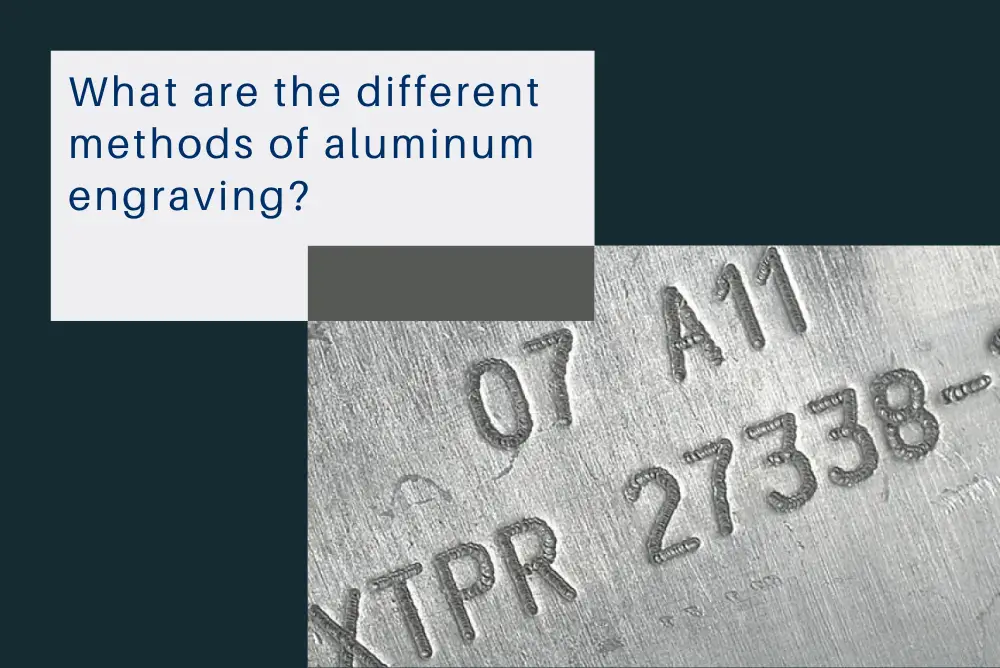
Dot peen marking creates permanent, highly readable marks by forming controlled indentations on the surface. The process generates a matrix of dots whose depth and size can be precisely adjusted. The result is a uniform appearance, even on untreated or slightly rough surfaces.
This marking method slightly deforms the surface without removing material, ensuring reliable traceability without compromising the part. Dot peen engraving is particularly well suited for DataMatrix codes and serial numbers on structural components. Since aluminum is softer than many other metals, the stylus enjoys a longer service life, resulting in lower operating costs compared to marking harder materials.

Scribing on aluminum
Scribing uses a carbide or diamond tip to draw continuous, deep lines across the aluminum surface. This method produces clean, aesthetic, and uninterrupted characters, offering a more refined appearance than dot peen marking. On aluminum, scribing delivers deep, sharp grooves while maintaining excellent durability throughout the product’s lifecycle.
Scribing is especially suitable for identifying parts used in harsh environments. Thanks to aluminum’s softness, tool wear is minimal over time, reducing replacement costs and machine downtime.

Rotary engraving on aluminum <h3>
Rotary engraving, also known as mechanical engraving, uses a rotating tool to remove material from the surface. On aluminum, this technique produces precise engravings with fully controllable depth. The finished surface can be polished for visual appeal or left rough for heavy-duty industrial applications.
This method is ideal for small text, detailed logos, or decorative products. By accurately removing material, rotary engraving ensures long-lasting markings with excellent sharpness. With a wide range of spindles and cutting tools available, rotary systems can also cut through aluminum sheets to produce front panels and similar components.

Applications of Aluminum Marking
Gravotech technologies make it possible to permanently engrave serial numbers, DataMatrix codes, QR codes, and logos directly onto aluminum components such as structural frames, engine blocks, housings, and aerospace parts—ensuring full traceability throughout the product’s entire lifecycle.
Beyond traceability, Gravotech’s rotary engraving solutions are widely used in manufacturing processes to machine high-precision aluminum front panels for electronic equipment.
In the personalization market, Gravotech’s compact laser and rotary engraving machines also enable on-demand customization of items such as drinkware, pet ID tags, decorative plates, or carabiners directly at the point of sale. This allows businesses to create unique, personalized designs that remain durable over time.

Quick comparison of aluminum engraving and marking technologies
|
Technology |
Laser |
Dot peen |
Scribing |
Rotary |
|
Process type |
Non-contact, surface modification |
Mechanical, dot-by-dot indentation |
Mechanical, continuous line marking |
Mechanical, material removal by cutting tool |
|
Marking depth & durability |
Shallow to medium, very durable, resistant to abrasion |
Deep and permanent, excellent resistance in harsh environments |
Medium depth, resistant and long-lasting |
Deep engraving, highly resistant over time |
|
Speed & productivity |
Very high speed, suitable for serial production |
Fast on aluminum due to softness, suitable for high-volume DPM |
Medium speed, efficient on large components |
Moderate speed, depending on tool and complexity |
|
Visual result on aluminum |
High-contrast marks (white, gray, or black depending on parameters and anodizing) |
Dot matrix appearance, functional and durable |
Smooth, aesthetic lines, highly legible |
Crisp edges, professional and elegant finish |
|
Typical applications |
Logos, dates, serial numbers, Datamatrix codes, regulatory markings, names |
Text, dates, serial numbers, Datamatrix codes, regulatory markings |
Text, dates, serial numbers, regulatory markings |
Text, names, dates, serial numbers, logos |
FAQ: the 6 questions most frequently asked of our experts
Which technology is best suited for engraving or marking aluminum?
The choice depends on the specific application. Laser engraving is ideal for high precision and detailed graphics; dot peen is well suited for permanent industrial identification; scribing creates smooth, aesthetically pleasing lines on larger parts; while rotary engraving is best for deep cuts and a more traditional look with an excellent surface finish. In short, the right technology depends on the exact marking requirements.
Does laser engraving damage aluminum?
No. Laser engraving is a non-contact process that only affects the surface of the aluminum without weakening its structural integrity. Laser marking produces clear, permanent marks with adjustable contrast and is particularly effective on anodized aluminum.
How durable are markings on aluminum?
When performed using industrial marking technologies such as laser, dot peen, scribing, or rotary engraving, aluminum markings are highly resistant to wear, chemicals, and environmental exposure. This ensures reliable traceability throughout the product’s service life.
Is aluminum suitable for DataMatrix or QR code marking?
Absolutely. Aluminum’s excellent machinability makes it ideal for direct code marking. Dot peen and laser technologies are especially recommended, as they provide high readability and comply with standards in industries such as aerospace, automotive, and medical devices.
What do the results of different aluminum engraving methods look like?
The visual appearance depends on the technology used: laser engraving can produce white, gray, or black contrast; dot peen creates a pattern of dots; scribing produces continuous, refined lines; while rotary engraving cuts deeply into the material, revealing the natural metal surface.
How can engraved aluminum parts be paint-filled?
Paint filling is a simple and effective way to enhance the visibility of engraved aluminum parts. After engraving, paint or enamel is applied into the engraved grooves, and the excess is wiped away, leaving color only in the recessed areas. This creates high contrast, allows color customization, and delivers a durable decorative finish. The technique is commonly used for front panels, signage, nameplates, and personalized aluminum products.
Some examples of aluminum engraving:


 Read more