 Contents
- What is a Linear Motion Guide?
- How a Linear Motion Guide Works
- Structure of a Linear Motion Guide (Rail, Carriage, and Rolling Elements)
- Types of Linear Motion Guides
- 1. Full-Ball Linear Motion Guide
- 2. Roller Bearing Linear Guides
- 3. Needle Roller Linear Guides
- 4. Slide Linear Guides
- 5. Cross Roller Guides
- Applications of Linear Motion Guides
- How to Choose the Right Linear Motion Guide
What is a Linear Motion Guide?
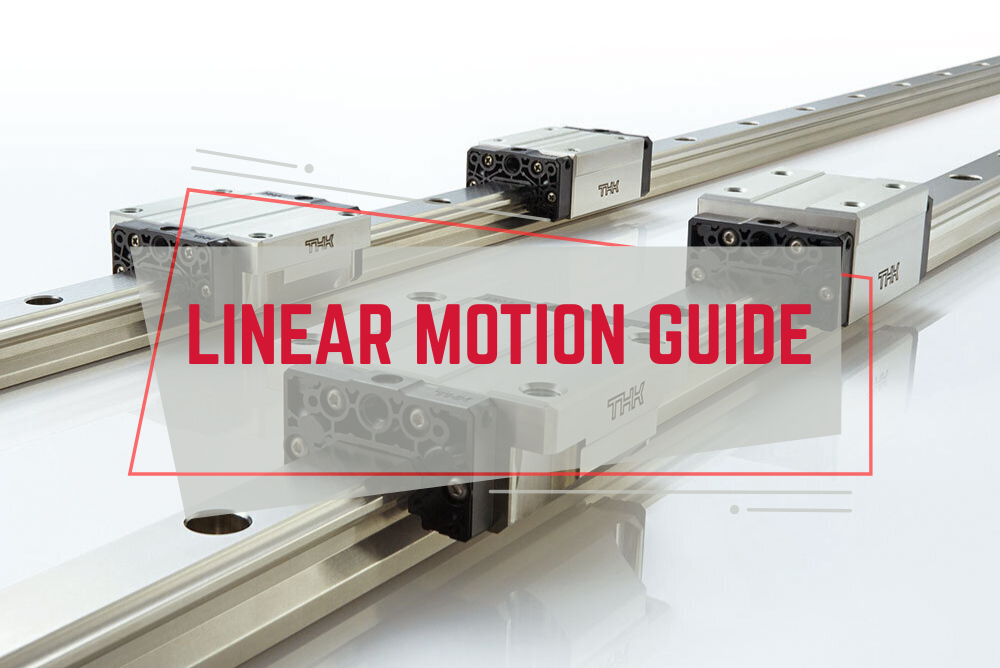
A Linear Motion Guide is an essential component in mechanical engineering, widely used in fields ranging from medical equipment to semiconductor manufacturing machines. Developed from the same principles as rolling bearings for rotary motion, linear motion systems enable heavy loads to move smoothly and precisely along a straight path.
What sets this system apart is its ability to support highly accurate linear travel. Rolling elements—either balls or rollers—move along the guide rail, reducing friction and ensuring stable, controlled motion.
You’ll find Linear Motion Guides in machine tools, automation systems, 3D printers, and even everyday mechanisms like drawers or sliding doors. As technology advances, the demand for accurate and durable linear motion mechanisms continues to grow.

How a Linear Motion Guide Works
A Linear Motion Guide provides stable, low-friction, and highly precise straight-line motion, especially under heavy loads. It operates by recirculating balls or rollers between the rail and carriage, significantly improving motion efficiency.
Rail and Carriage Configuration
A Linear Motion Guide consists of two main components:
- A fixed guide rail
- A carriage (also called a slider or block) that travels along the rail
The rail serves as the straight guide path, while the carriage is attached to the load or mechanism that requires linear movement. Common rail types include round rails, square/profile rails, crossed-roller rails, and custom designs.
Reducing Friction Between Rail and Carriage
To minimize friction, Linear Motion Guides use circulating balls or cylindrical rollers as rolling elements, reducing the contact area between surfaces. Because the mechanism is based on rolling instead of sliding, it delivers smooth movement and low resistance—similar to linear motion systems on round shafts.

Load Handling and Load Distribution
Linear Motion Guides are designed to withstand axial loads, radial loads, and even moment loads. Load capacity depends on rail size and operating environment. Loads are evenly distributed across the rail and rolling elements, reducing stress concentration and lowering the risk of premature failure.
High-Precision Positioning
In machine tools and other precision applications, repeatable accuracy is critical. With low friction, high rigidity, and stable running accuracy, Linear Motion Guides maintain minimal deviation from the intended path.
Structure of a Linear Motion Guide (Rail, Carriage, and Rolling Elements)

A Linear Motion Guide features several key components that work together to deliver accurate, stable linear motion:
Guide Rail
The rail is the primary load-bearing element, typically made from stainless steel or aluminum to ensure strength and durability. Rails come in various shapes—square, round, rectangular—depending on load requirements and installation space. Length can be customized to match the required stroke.
Carriage (Slider/Block)
The carriage travels along the rail and houses the rolling elements. It also serves as the mounting surface for the load. Carriages are available in several designs, such as standard blocks or flange blocks, and many models incorporate dust protection to shield the rail.
Rolling Elements
Rolling elements recirculate inside the carriage to minimize friction and ensure smooth linear travel:
- Ball bearings: The most widely used rolling element in Linear Motion Guides. Suitable for high-speed operation with light to medium loads.
- Cylindrical or straight roller bearings: Use cylindrical or tapered rollers, providing higher radial load capacity and excellent stiffness. Ideal for heavy-duty applications.
- Needle bearings: Utilize thin, needle-shaped rollers. They offer high radial load capacity in extremely limited space, although they are less common in standard Linear Motion Guides.
Types of Linear Motion Guides
Each type of Linear Motion Guide is designed to meet specific requirements for rigidity, precision, load capacity, installation space, and operating environment. Selecting the right type ensures smooth, stable, and long-lasting linear motion.
Below are the most widely used groups in mechanical engineering and automation.
1. Full-Ball Linear Motion Guide
This is the most common type today. It features precision-ground, hardened rails combined with a ball-type carriage. With point or line contact between the rolling elements and the raceway, it offers high rigidity, excellent repeatability, and strong load capacity.
Full-Ball Linear Motion Guides are widely used in CNC machines, robots, automation equipment, and systems requiring stable, reliable operation.

2. Roller Bearing Linear Guides
For heavy loads or applications that demand high rigidity, roller-type guides outperform ball-type designs. The longer contact surfaces of rollers provide greater stiffness and reduced deformation under load.
They are ideal for large machine tools, heavy-duty automation lines, material-handling systems, and equipment that requires long-term stability under sustained loads.

3. Needle Roller Linear Guides
These guides are compact and use slender needle rollers, delivering very high radial load capacity in minimal space. They are commonly found in small-stroke linear stages, precision measuring devices, optical instruments, and micro-positioning mechanisms where installation space is extremely limited.
4. Slide Linear Guides
Unlike systems with rolling elements, slide-type guides rely on direct sliding contact between surfaces. This design is suitable for compact spaces, high precision, low speed, and stable operation in vibration-free environments.
They are commonly used in optical equipment, electronic devices, measuring instruments, and lightweight positioning systems.

5. Cross Roller Guides
Cross Roller Guides are designed for applications requiring ultra-high accuracy and completely backlash-free motion. Rollers are arranged at 90° in a “crossed” pattern, delivering exceptional rigidity and extremely smooth movement.
They are widely used in coordinate measuring machines (CMMs), precision linear stages, optical inspection systems, and robotics applications that require micro-movement control.

Applications of Linear Motion Guides
Linear Motion Guides are used across a wide range of industries. Some of the most common applications include:
1. Machine Tools
Thanh trượt dẫn hướng tuyến tính được sử dụng rộng rãi trong các máy gia công kim loại như máy phay, máy tiện, máy mài, máy khoan CNC và máy cắt tia laser. Hệ dẫn hướng mang lại chuyển động tuyến tính chính xác cho các trục X–Y–Z, giúp duy trì độ lặp lại vị trí cao, giảm rung động khi cắt. Với độ cứng lớn và khả năng chịu mô-men cao, chúng đặc biệt phù hợp trong các máy công cụ yêu cầu độ ổn định trong thời gian dài.
2. Robotics and Automation
In industrial and collaborative robots, Linear Motion Guides play a key role in precise positioning for sliding axes, grippers, positioning stages, and linear modules. They are also widely used in gantry robots, pick-and-place systems, smart conveyors, palletizing systems, and other robotic platforms that require smooth and controlled linear movement.
3. Packaging and Material Handling
In packaging lines, Linear Motion Guides enable precise movement of mechanisms such as labeling heads, grippers, cutters, capping units, and product alignment modules. In material-handling systems, they appear in shuttle racks, feeders, palletizing machines, and automated transport units.
4. Medical and Laboratory Equipment
Linear Motion Guides are commonly found in diagnostic imaging systems, surgical robots, automated test analyzers, patient positioning tables, and precision optical assemblies—where smooth, accurate, and clean linear movement is essential.
5. Electronics and Semiconductor
Applications such as SMT pick-and-place machines, AOI inspection systems, wafer-handling modules, and precision assembly tools require extremely high repeatability and cleanliness. Therefore, Linear Motion Guides with excellent lubrication performance and caged-ball designs are preferred to minimize dust generation and ensure long-term reliability.
6. Printing & Optics
Industrial printers, scanners, camera-alignment platforms, lens modules, and laser projection equipment all use Linear Motion Guides to maintain precise positioning of printheads, optical components, or moving assemblies.
How to Choose the Right Linear Motion Guide
Selecting the correct Linear Motion Guide requires evaluating several important technical factors:
1. Load and Applied Moments
Start by determining the static load, dynamic load, and all moment loads acting on the guide system during operation. For heavy-load applications or systems exposed to large moments, roller-type Linear Motion Guides are generally the better choice.
2. Required Accuracy
Each machine has its own accuracy requirements. High-precision equipment—such as CNC machines, metrology instruments, semiconductor tools, and systems requiring exceptional repeatability—should use high-accuracy grades of Linear Motion Guides. For general applications, standard accuracy levels are sufficient and help reduce cost.
3. Operating Environment
Environmental factors significantly influence guide selection. Dusty environments with chips or fine particles require additional seals, end caps, or protective covers for rails and carriages. For humid, chemical, or cleanroom environments, corrosion-resistant materials, specialized lubricants, or appropriate accessories are necessary to maintain durability and cleanliness.
4. Stroke, Dimensions & Mounting Orientation
Rail size, required travel length, and mounting orientation (horizontal, vertical, or inverted) all affect load capacity and running stability. The mounting surface must also meet flatness specifications to ensure accurate movement.
5. Duty Cycle & Maintenance
For machines operating continuously or requiring long service life, choose models with strong grease retention. When low noise and reduced maintenance are priorities, caged-ball designs are recommended because they reduce metal-to-metal contact and minimize running noise.
6. Trusted Brands
Brand reliability is especially important for systems requiring long-term precision and stability. THK (Japan), for example, is one of the world’s leading innovators in Linear Motion Guide technology.

As the official distributor of THK products in Vietnam, Temas provides a complete lineup including Linear Motion Guides, ball screws, linear tables, cross roller guides, and electric actuators—all supported with comprehensive engineering solutions.
If you're looking for the right THK Linear Motion Guide for your specific application, Temas is ready to assist with analysis and optimal design recommendations. Contact us today for expert support.



 Read more