 Contents
What Is a Vacuum Ejector?
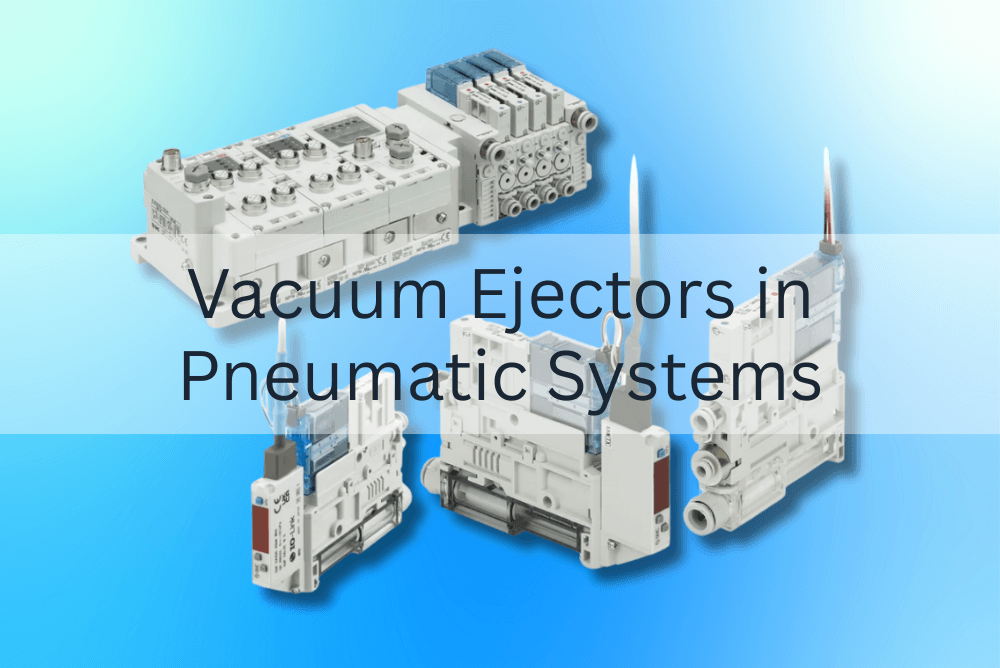
A vacuum ejector is a device that uses compressed air to generate negative pressure (vacuum). It is commonly used for suction, holding, or transporting objects in industrial pneumatic systems.
In principle, a vacuum ejector operates by creating a pressure difference between the surrounding environment and the suction area. This is achieved by removing a portion of the air from the target area. The resulting pressure differential generates a suction force, allowing vacuum cups to firmly grip product surfaces during handling operations.
Vacuum ejectors are widely applied across various industries, including vacuum packaging, printing, industrial cleaning, vacuum-assisted assembly processes, as well as medical devices and healthcare applications.
How Does a Vacuum Ejector Work?
A vacuum ejector operates by generating low pressure through the use of compressed air. When compressed air passes through the Venturi nozzle inside the ejector, the air velocity increases while the pressure at the center decreases, creating a vacuum zone.

Due to the pressure difference between the surrounding atmosphere and the vacuum zone, air is drawn out of the suction area, generating holding force to secure or lift products. Because vacuum ejectors do not rely on moving parts such as pistons or vanes, they feature a compact design and fast response time.
In applications such as robotic pick-and-place, packaging, and printing, vacuum ejectors are used to grip and hold materials reliably throughout the operation.
Factors Affecting Vacuum Ejector Performance
The performance of a vacuum system depends not only on the ejector itself but also heavily on installation conditions and the overall quality of the compressed air system. Condensation Checker
1. Compressed Air Quality
One of the most critical factors is the quality of compressed air supplied to the vacuum ejector. Air containing moisture, dust, or contaminants can reduce ejector performance, clog air passages, and gradually degrade vacuum generation over time. This can be mitigated by integrating humidity sensors into the air lines to monitor relative moisture levels within the system.

2. Piping and Tubing
In addition to air quality, the design of the suction piping directly affects vacuum efficiency. Longer suction lines result in greater pressure losses, especially when small-diameter tubing is used. In many cases, the vacuum level measured at the ejector may meet specifications, but the suction force at the vacuum cup is insufficient due to pressure loss along the piping. Therefore, suction lines should be kept as short as possible, and tubing diameter should be selected to match the system’s actual airflow requirements.
3. Fittings and Pneumatic Connections
The number of joints, elbows, and tees in the suction line is another common cause of performance degradation. Each connection presents a potential leak point and creates localized pressure loss, particularly in manually assembled systems or retrofitted production lines.

4. Installation Position
Installation location also plays an important role. Placing the vacuum ejector too far from the suction cups increases suction line length and leads to additional pressure losses. In applications requiring fast response and stable holding force, installing the ejector as close as possible to the vacuum cup significantly improves response time and system reliability.
Which Industries Use Vacuum Ejectors?
Vacuum ejectors are highly versatile devices used across a wide range of industries. They are most commonly found in the food industry, particularly in packaging systems. Other key application areas include:
- Automotive industry: assisting with precise assembly and component handling
- Electronics and semiconductor industry: handling small components with high accuracy requirements
- Medical field: manufacturing and operating biomedical equipment
- Printing industry: transporting and positioning paper and printed materials
- Industrial cleaning, material handling systems, and research laboratories
In some applications, maintaining a stable suction force is critical to prevent excessive vacuum that could damage products or insufficient vacuum that may cause products to drop during handling. In such cases, vacuum ejectors with integrated pressure sensors—such as the SMC ZK2 series—are used. These units can automatically shut off the air supply once the required vacuum level is reached, reducing air consumption by up to 90%.

Key Considerations for Effective Vacuum Ejector Operation
To maximize the effectiveness of vacuum ejectors in pneumatic systems, several important factors should be considered during installation and operation.
First, the ejector must be installed and connected correctly, particularly the compressed air supply line and suction line, to minimize leakage and ensure stable vacuum levels.
Regular maintenance is also essential, including cleaning vacuum filters to prevent dust or contaminants from entering the system and reducing suction performance. For ejector-type vacuum generators, it is crucial to ensure a clean and dry compressed air supply, as air quality directly impacts equipment lifespan.
Temas is an authorized distributor of SMC products in Vietnam, offering a full range of pneumatic solutions, solenoid valves, and pneumatic equipment for various manufacturing and automation applications. With extensive hands-on experience in factory deployments, Temas not only supplies equipment but also provides consulting services for system selection, configuration, and vacuum system optimization tailored to specific applications.
For customers interested in learning more about or implementing SMC vacuum ejectors in their production lines, please contact Temas for detailed consultation.


 Read more