 Contents
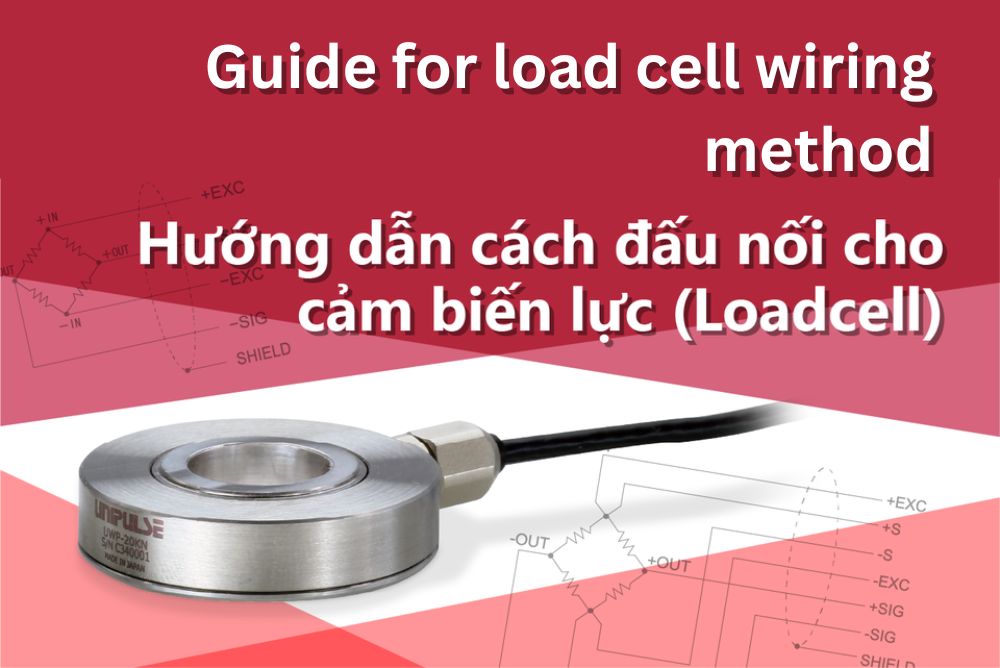
A load cell is a sensor that measures weight or force. Load cells, as well as the amplifiers and indicators they are connected to, are classified into 4-wire type and 6-wire type. This section explains the wiring methods for both 4-wire and 6-wire systems.
If wiring is not done correctly, the system may experience:
- Inaccurate measurements
- Sensitivity to ambient temperature changes
- Errors caused by signal cable length
- Unstable readings on the indicator
Below are the common wiring combinations between load cells and amplifiers or indicators:
- 4-wire load cell with 4-wire input indicator
- 6-wire load cell with 6-wire input indicator
- 4-wire load cell with 6-wire input indicator
- 6-wire load cell with 4-wire input indicator
1. Connecting a 4-Wire Load Cell to a 4-Wire Input Indicator

- A 4-wire type load cell is connected directly to a 4-wire input indicator.
- Each wire must be connected to the corresponding terminal with correct polarity.
2. Connecting a 6-Wire Load Cell to a 6-Wire Input Indicator

- Monitoring the +EXC and -EXC lines at the load cell is called the remote sensing method.
- For a 6-wire type load cell:
- +S is the wire used to monitor the voltage of +EXC
- -S is the wire used to monitor the voltage of -EXC
- By using an indicator equipped with a function that maintains the voltage between +EXC and -EXC at a constant level, this method enables accurate measurements without being affected by cable length or temperature changes.
Some indicators equipped with the remote sensing method support this wiring configuration:
| Standard Type Weighing Indicator FC1000 | Graphic Display / Touch Panel Type Weighing Indicator F805AT series |
 |
 |
| Go to FC1000 product page | Go to F850AT product page |
| All-in-One Type Weighing Indicator F800 | Graphic Display / Touch Panel Type Weighing Indicator F600AT |
 |
 |
| Go to F800 product page | Go to F600AT product page |
3. Connecting a 4-Wire Load Cell to a 6-Wire Input Indicator

- On the indicator side, using a connector or terminal block:
- +EXC and +S must be short-circuited
- -EXC and -S must be short-circuited
- If this is not done correctly, the display on the indicator may become unstable.
4. Connecting a 6-Wire Load Cell to a 4-Wire Input Indicator

Method 1:
- Short-circuit +S to +EXC
- Short-circuit -S to -EXC
- Then connect +EXC and -EXC to the indicator
Method 2:
- Connect only +EXC and -EXC of the load cell to the indicator
- Insulate the +S and -S wires using insulating tape or equivalent material
Load cells and indicators are available in both 4-wire and 6-wire configurations. Each load cell and indicator combination requires a specific wiring method. Proper wiring is essential to ensure accurate measurements and stable system operation.
If you encounter any issues during installation or wiring, please contact us. Temas’ experienced engineering team, trained directly by UNIPULSE, is ready to support you.
Temas is an authorized UNIPULSE distributor in Vietnam. View the full range of UNIPULSE force, weight, and torque measurement products here.



 Read more